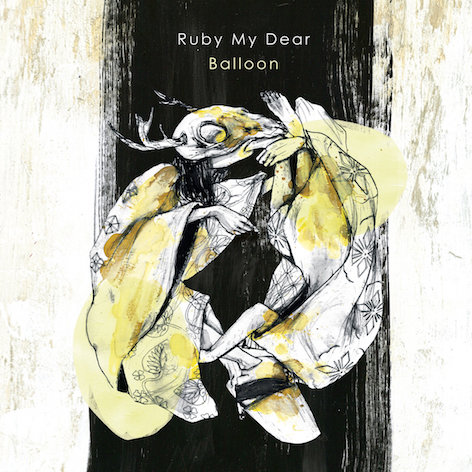
Balloon by Ruby My Dear

Balloon - Ruby My Dear

Year: 33XX. Your consciousness is implanted in a nano-fly, minuscule and imperceptible to the naked vision. You are released into a fog of your brood, and add to the swarm’s cacophony. Their rapid, seemingly random movements engulf everything, yet your meticulously honed senses allow you to make some sense of it all. As your “eyes” adjust further, your “ears” absorb the intricacies within the noise, and a tuneful voice rises from below . . .

Breakcore is known for its barraging beats and breakneck transitions at blistering speeds, making it one of the more daunting electronic genres to approach. A select few artists are contorting the style’s sonic palette, though, and subsequently ushering in a new breed of enthusiasm. Balloon is the newest release from Toulouse native Julien Chastagnol as Ruby My Dear, a producer at the helm of the genre’s innovation.

Within four tracks clocking in at 20 minutes, Chastagnol paints a mural of breakcore’s possibilities. The traditional, blindingly fast digital drums are present, although they carry none of the genre’s frequent harshness, but rather a graceful delicacy that makes each track sound like a symphony. Glowing melodies and vocal samples ride the intricate rhythms, adding deep layers of color that give the songs a rare emotive quality.

Chastagnol has an eye for dynamics and makes use of every inch across the spectrum, from soft passages of quiet loveliness to all-out bombast. It’s a beautiful listening experience, and each subsequent listening reveals new, entirely captivating discoveries. For anyone wishing to delve into the world of breakcore, there isn’t a better place to begin than Balloon. If you’re seeking dynamic, melodic breakcore, this album is for you.

– stasi (@stasisphere)

Balloon by Ruby My Dear

Blackstar by David Bowie

David Bowie - Blackstar

A flame splits the black clouds and plunges into the planet’s surface. A pillar of light emerges from the ground, extends up into the night sky, and steadily fades away. A man crawls out of the crater left behind from the impact. He walks until he sees a sign of civilized life, in the form of fluorescent twinkling in the distance. Many years pass; the man is old now, having loved and been loved by the planet deeply. It’s time to say goodbye to the starman . . .

Mortality; it’s the dark, looming door at the end of everything and everyone. There are those individuals that leave behind greatness, and then there are those with lifetimes worth of greatness to their name. These are the ones that take with them a shade of color from life in their passing. David Bowie was the embodiment of this type of individual, and Blackstar is his farewell to a world that was changed greatly by the artist.

Up till the very end, Bowie continued to conceive new ideas, and constantly innovate in his art to best communicate those ideas. The enigmatic artist dabbled in every genre, but the poignancy of the shadowy, electronic-tinged jazz compositions found on his final full-length record is astounding. The songs possess that irresistible “Bowie appeal,” but they contain new elements of bleak, improvisation-heavy experimentation.

This is a record created by a man who knew he was on his way out, and listening to it as such is overwhelming. David Bowie was a hero of mine, and the lives of pretty much everyone will forever be altered by his artistic contributions. We should consider ourselves blessed to have lived at the same time as him, and the Starman will be mourned deeply. If you’re seeking progressive, experimental jazz, this album is for you.

– stasi (@stasisphere)
Blackstar by David Bowie

Perils by Perils

Perils - Perils

You are sealed within a glacier, motionless in the frigid air of the vast tundra. You look through the distorted transparency of your frozen chamber and out at the desolate, white nothingness. A minuscule light appears on the horizon. It steadily grows larger and is joined by more lights of varying sizes. It’s a large group of living individuals, and they settle their camp at the base of your glass tomb. You listen to inklings of their communal songs . . .

Drone has captured my heart. I’ll admit, I initially dismissed the genre, pigeonholing it as arbitrary “music” with no real direction, but that couldn’t be further from the reality. Patience and subtlety are the hallmarks of drone; if a listener possesses the former and appreciates the latter, the beauty is unveiled. Perils is the newest full-length from the similarly named producer duo, made up of Kyle Bobby Dunn and Thomas Meluch.

The extent of these songs are split between Dunn’s instrumental drone soundscapes that envelop the listener in blankets of steadily morphing ambience, and more tuneful compositions led by the soft, harmonically rich vocals of Meluch. Both artists are stalwarts within the ambient music scene, and the ways in which they weave their unique talents together are awe-inspiring in their composition and execution.

Dunn and Meluch independently wrote and recorded the tracks for this record in separate locations; Dunn in Ontario (post-solo album) and Meluch in transit from the UK to Seattle. This release is about the anxieties, questions, and uncertainties of transition, both figuratively in Dunn’s case and literally in Meluch’s, and the solace required to persevere. If you’re seeking enveloping, harmonically rich drone, this album is for you.

– stasi (@stasisphere)

Perils by Perils

A New Place 2 Drown by Archy Marshall

Archy Marshall - A New Place 2 Drown

You sit on a dock at the edge of a grand lake. You search for the opposite shore in the dense fog, while your legs dangle just above the murky water. The haze grows thicker, until you can’t see your hand that waves directly in front of your face. A coldness passes through your body, and exits as quickly as it struck. You turn around, and see a house that wasn’t previously there. You enter through the door. A phantom floats in the center, in front of a computer . . .

The thread of hip-hop never leaves the fabric of those that once felt a fondness for it. Its influence always seems to find its way back into the music created by artists that can say they’ve ever loved the genre, no matter how removed from the style their previous output happens to be. A New Place 2 Drown is the newest full-length from Londoner Archy Marshall (AKA King Krule), a chameleonic, beat-loving singer-songwriter.

Marshall’s debut album as King Krule placed his deep, wise-beyond-his-years voice and blues-flavored guitar in the forefront of arrangements, but this record casts a ghostly shroud around his rugged crooning. The misty atmosphere, eerie experimentalism, and sluggish, trunk-rattling beats invoking the spirit of DJ Screw are the focus in these tracks, while Marshall treats his singing as a phantom within the enveloping instrumentation.

And A New Place 2 Drown isn’t just a record, either; it’s the name given to three pieces of art released cohesively. Aside from the collection of songs, Marshall also put out a short film, as well as a 208-page book of photography, poetry, and sketches by himself and his older brother Jack. This is an artist that openly welcomes others into his world, and what a fascinating world it is. If you’re seeking ghostly hip-hop, this album is for you.

– stasi (@stasisphere)

A New Place 2 Drown by Archy Marshall

Imaginary Lines by Fatima Yamaha

Fatima Yamaha - Imaginary Lines

You swim below the ocean’s surface. The flood light on your scuba suit pierces the darkness, illuminating creatures that pass in front of your face. Suddenly, the light flickers and is extinguished, leaving you immersed in impenetrable blackness. You spot a purple light in the distance. You approach the beacon until it’s directly over you. You swim up and emerge out of the water, into a cavern adorned with twinkling crystals. You stride onto the dance floor . . .

So much can be communicated by saying so very little. A mere beat, melody, or groove can hold the most crucial meaning, and the deeper messages won’t even be revealed until the fourth or fifth time it traverses through one’s ears (if ever), because the music is so unimposing and immediately enjoyable. Imaginary Lines is the newest full-length by Dutch producer Bas Bron (formerly Bastian) under his Fatima Yamaha moniker.

All that Bron requires for these tracks are a couple glowing synth melodies, gently pulsating drums, and body-moving bass lines. The producer contorts these three elements into polished, subtly evolving compositions that dwell in the realms of disco, ambient, electro, and house. With so few components in the mix, it’s astounding that these songs sound this lush, and it’s a true testament to Bron’s level of innovation.

This record can easily be enjoyed solely at the surface level, but there are darker themes lurking between its folds. Imaginary Lines is Bron’s graceful commentary on 2015’s global refugee crisis. The “lines” referenced in the title may be the same lines that individuals die for every day, and although they may be “imaginary,” their impacts are very real. If you’re seeking melodically-superb disco/electro/house, this album is for you.

– stasi (@stasisphere)

Imaginary Lines by Fatima Yamaha

But You Caint Use My Phone by Erykah Badu

Erykah Badu - But You Caint Use My Phone

Your phone wakes you. Your eyes are greeted by the darkness in your room, accentuated by the flashing light that accompanies the blaring tone. You stumble out of bed and grab the device. You press answer and hold it up to your ear. You are driving between towering buildings in the heat of the sun. Your phone rings again, and you reluctantly lift it to your cheek. You’re surrounded by a large crowd jumping to a beat. You feel your pocket vibrate . . .

Mixtapes are everything in hip-hop. If they can’t rent a producer for an LP’s worth of instrumentals, or (gasp!) produce it themselves, vocalists gather tracks created by their favorite producers and add their own flavor on top. This specific artist hardly needs to restrain herself to this format, but she honors her roots by owning it completely. But You Caint Use My Phone is the newest full-length mixtape by singer-songwriter Erykah Badu.

This is a mixtape in the truest sense of the term, as it consists primarily of Badu contorting telephone-focused songs by other artists — including the Isley Brothers, Egyptian Lover, New Edition, Usher, and Drake (yes, it’s “Hotline Bling”) — by adding her iconic vocals and sound design nuances with producer Zach Witness. Along with comedic skits included, this record has an off-the-cuff feel that’s loads of fun.

For Badu, phones aren’t to be taken for granted; they’re supernatural devices that stretch across space and time, and span the gap between this life and the next. They have the potential to distort intentions and ruin connections, but they also possess the power of seemingly infinite communication. This record is evidence that she isn’t alone in her thinking. If you’re seeking mixtape-format, soulful r&b, this album is for you.

– stasi (@stasisphere)
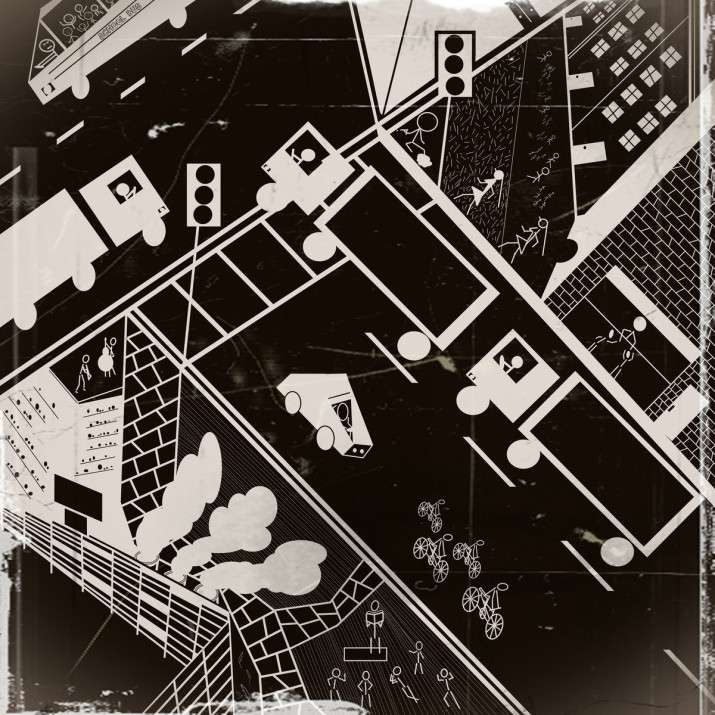
But You Caint Use My Phone by Erykah Badu

Civil Circus by Diggs Duke

Diggs Duke - Civil Circus

You crawl out from a steaming manhole in the center of an intersection. The rain stopped moments ago, but the gutters roar like rushing rivers. You sprint to the sidewalk, and into a nearby park to rest upon a bench. You wake to a saxophone trilling in the distance. You follow the faint notes out of the park, and down a dingy alley. The sound stops as you come to a dead end. The brick wall contorts into multiple individuals with instruments. They play . . .

Jazz is uncensored music straight from the heart. It typically consists of less rigid arrangements than other genres, allowing much more room for experimentation and improvisational elements. It’s the style with which many began their professional music careers (including yours truly), and many find their way back. Civil Circus is the newest full-length from singer and composer Diggs Duke, a man who surely loves his jazz.

Duke spreads his far-reaching, poignant musings across this record like a diary. His irresistibly soulful voice is backed by diverse mixtures of instrumentation, including live drums, saxophones, bass, piano, acoustic guitars, and tinges of electronic experimentalism ala Flying Lotus. Some tracks are brief glimpses of ingenious soloing, while others are more reminiscent of hip-hop, r&b, and harmony-laden gospel.

You won’t find a more honest portrayal of Duke, and that’s because he performs exactly what his heart exclaims throughout these ten songs, thus removing the censorship from his artistry. It gives the record a voyeuristic quality, and makes the listening experience akin to taking a peak inside a unique life. This is the goal of most artists, and Duke greatly succeeds here. If you’re seeking poignant, jazz-tinged soul, this album is for you.

– stasi (@stasisphere)

Civil Circus by Diggs Duke

Gode by André Bratten

André Bratten - Gode

You walk the dusty road between tall, towering crops within a vast field. The grey clouds that hang heavy above you signify rain. Just as the thought passes, a droplet splashes onto your forehead. The sky opens its gaping mouth and pours upon all. The greenery surrounding you begins to grow at a startling pace. It ascends and weaves together to form a canopy over your head. You continue walking the now-muddy path, and listen to the sounds that drip down . . .

In essence, music is but a vessel. It’s a vehicle in which to place an idea or story for the purpose of communication to those that will listen and, hopefully, understand. Gode is the newest full-length from André Bratten, a producer from Oslo. Bratten shaped this record as a tribute to the rural working class of his home country in the early 20th century. It’s a history lesson and a gorgeously produced album rolled into one.

Bratten is nothing if not versatile in his sound design. The seasoned producer utilizes a mixture of glistening string arrangements, contorted piano, and layers of field recordings, all recorded through tape machines and adorned with subtly propulsive rhythms, to create these lush compositions. Genres are difficult to pin down in this case, but there are included flavors of post-rock, techno, trip-hop, and beautiful ambience.

The title literally translates to a tool used to prod cattle, but it’s also come to mean “a right or privilege,” and served as a spiritual symbol of the indentured labor performed by the above-mentioned social class. Hardship was ceaseless for them, and only the privileged could afford to create art. This record is Bratten’s hymn to those people, a voiceless generation. If you’re seeking potent, lush electronics, this album is for you.

– stasi (@stasisphere)

Gode by André Bratten

100 Ladies by Zora Jones

Zora Jones - 100 Ladies

You float within a realm of amorphous, fluorescent beings. They divide themselves and conjoin with neighboring bodies, creating a constantly shifting mass of light and movement. You look down at your hands, and they too are translucent. You imagine their separation from your wrists; they throb, and shoot off into the undulating ecosystem. You begin to relax and allow yourself to be absorbed into it all. The waves of sounds and voices follow . . .

As with any artist in some form or another, musicians must pay their dues. Dedication of time and effort to refining one’s craft is crucial, and the footwork scene might preach that more outwardly than anyone. 100 Ladies is the debut release from Zora Jones, a Barcelona-based, Austrian-born producer. The record’s title is a reference to a personal pact that she made: to create 100 tracks before releasing anything to the public.

Jones mixes distinct flavors of footwork and grime in her music, but these songs wouldn’t fall into either of those categories. These bright, bubbly compositions possess a fluid malleability and a meticulous attention to melodic detail that’s rare in the above-mentioned genres. The chosen instrumental palettes are also otherworldly and unique, consisting primarily of glistening rhythms and contorted, bird-like vocal harmonies.

The producer cites 2010 as year zero; it was the first time she witnessed a performance by the late DJ Rashad, footwork pioneer and Teklife founder. He gave her a batch of his tracks (produced with his Ghettoteknitianz crew), and the rest is history. Music is most powerful when it’s shared communally, as it results in the birth of evolutions such as this. If you’re seeking otherworldly, grime-tinged footwork, this album is for you.

– stasi (@stasisphere)
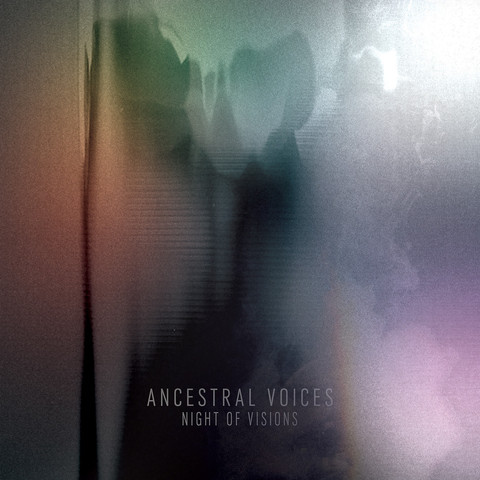
100 Ladies by Zora Jones

Night Of Visions by Ancestral Voices

Ancestral Voices - Night Of Visions

You dive behind a pile of debris to avoid a surveillance drone passing overhead. You peak out to confirm that it’s departed from the immediate area, and you continue across the vast, desolate wasteland. You arrive at the gaping mouth of a valley, and duck behind a boulder when you spot a fire surrounded by tents at its sunken center. You approach, and as the light in the sky descends below the horizon, the valley and its mysterious tribe come to life . . .

Extremes exist in music creation; artists either a) dedicate themselves to tirelessly refining their skill in one style, or b) allow their personal concoction of expertise and imagination the freedom to explore unknown worlds. We can thank the latter category for this one. Night Of Visions is the newest full-length from UK producer Liam Blackburn, formerly known as Indigo, and now reemerged with a new sound as Ancestral Voices.

Having previously flirted with drum & bass, IDM, ambient, and techno, Blackburn calls upon elements of all his past loves to craft these monolithic soundscapes. There are also components of dubstep and house within the tribalistic rhythms, but the real focus is the enveloping atmosphere that the producer builds around the listener. The journey is darkly beautiful, patiently-evolving, and illustrated with masterful sound design.

It’s admirable for Blackburn to place the largest test of will at the very beginning of the record, in the form of the nearly 10 minute-long title track. It’s gorgeously sweeping in its sonic detail, stuffed with field samples, ambience, droning synths, and devoid of any mass appeal (in the best way). If you can make it through the entrance gates, a palace awaits. If you’re seeking tribalistic, experimental electronics, this album is for you.

– stasi (@stasisphere)

Night Of Visions by Ancestral Voices